Transform Business Agility with DevOps Automation Today
Introduction
DevOps automation services are revolutionizing how businesses deliver software and manage IT operations in today's fast-paced digital landscape. Organizations that embrace automation in their DevOps practices achieve faster deployment cycles, reduced errors, and enhanced collaboration between development and operations teams. As companies navigate the complexities of modern software delivery, implementing robust DevOps automation has become essential for maintaining competitive advantage and accelerating innovation.
Key Takeaways
DevOps automation services streamline software delivery pipelines, reducing deployment time by up to 80% while improving code quality and system reliability.
Integrating automation with digital transformation engineering initiatives enables organizations to build scalable, resilient infrastructure that supports business growth.
Strategic implementation of DevOps automation practices delivers measurable ROI through faster time-to-market, reduced operational costs, and enhanced team productivity.
The Strategic Value of DevOps Automation in Modern Business
DevOps automation transforms business operations by eliminating manual bottlenecks and creating seamless workflows across development and operations teams. Organizations implementing automated processes experience significant improvements in deployment frequency and system stability.
Modern businesses face mounting pressure to deliver innovative solutions rapidly while maintaining high-quality standards. DevOps automation services address this challenge by automating repetitive tasks such as code testing, integration, and deployment. This automation reduces human error by approximately 70% and frees technical teams to focus on strategic initiatives rather than routine maintenance. Companies leveraging automation report 60% faster incident resolution times and 50% improvement in overall system reliability. The strategic advantage extends beyond speed—automated DevOps practices enable organizations to scale operations efficiently, adapt to market changes quickly, and maintain consistent service quality across global operations.
Core Components of Effective DevOps Automation
Successful DevOps automation relies on four foundational pillars that work together to create efficient, reliable software delivery systems. These components form the backbone of modern development operations.
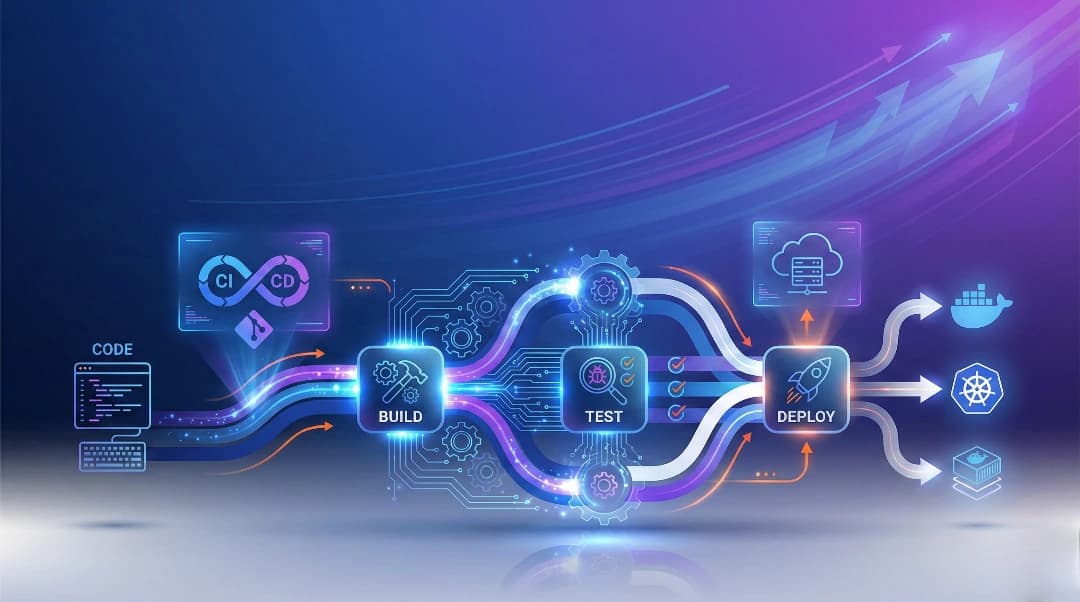
Continuous Integration and Continuous Deployment (CI/CD) forms the heart of DevOps automation, automatically building, testing, and deploying code changes. Automated testing frameworks validate code quality at every stage, catching bugs before they reach production. Infrastructure as Code (IaC) tools like Terraform and Ansible enable teams to provision and manage infrastructure through version-controlled configuration files. Configuration management systems maintain consistency across environments, ensuring development, staging, and production systems remain synchronized. Monitoring and logging automation provides real-time insights into system performance and application behavior. These components integrate seamlessly to create a robust automation framework that reduces deployment risks while accelerating delivery timelines. Organizations implementing comprehensive automation strategies report 45% reduction in deployment failures and 55% improvement in recovery times.
DevOps Automation and Digital Transformation Engineering
The convergence of DevOps automation and digital transformation engineering creates powerful synergies that accelerate business modernization efforts. This integration enables organizations to rebuild legacy systems while maintaining operational continuity.
Digital transformation engineering initiatives require robust, automated infrastructure to support rapid innovation and experimentation. DevOps automation provides the foundation for cloud migration, microservices adoption, and API-driven architectures that characterize modern digital platforms. Automated deployment pipelines enable businesses to test new features quickly, gather user feedback, and iterate based on real-world data. This approach reduces the risk associated with large-scale transformation projects by enabling incremental changes rather than risky big-bang migrations. Companies combining DevOps automation with hybrid cloud services achieve greater flexibility in workload management and resource optimization. The integration supports data-driven decision-making through automated analytics and monitoring, providing leadership with visibility into transformation progress and ROI metrics.
Implementing DevOps Automation: A Practical Roadmap
Organizations embarking on DevOps automation journeys should follow a structured approach that balances quick wins with long-term strategic objectives. Starting with a clear assessment and phased implementation ensures sustainable success.
Begin by conducting a comprehensive assessment of current development and operations processes to identify automation opportunities with highest impact. Prioritize automating build and deployment pipelines first, as these deliver immediate benefits in terms of speed and reliability. Establish a robust version control system and implement automated testing frameworks to maintain code quality throughout the development lifecycle. Gradually expand automation to include infrastructure provisioning, security scanning, and performance monitoring. Partner with experienced providers like IdeaGCS, which brings over 20 years of expertise in implementing DevOps automation across diverse industries. Train teams on new tools and processes while fostering a culture that values collaboration and continuous improvement. Monitor key metrics throughout implementation to demonstrate value and identify areas for optimization.
Measuring Success: KPIs for DevOps Automation
Quantifying the impact of DevOps automation requires tracking specific metrics that reflect both technical performance and business outcomes. These key performance indicators provide visibility into automation effectiveness and ROI.
Deployment frequency measures how often code changes reach production, with leading organizations deploying multiple times daily. Lead time for changes tracks the duration from code commit to production deployment, with automated systems reducing this from weeks to hours. Mean time to recovery (MTTR) indicates how quickly teams resolve incidents, with automation enabling faster diagnosis and remediation. Change failure rate shows the percentage of deployments causing production issues, typically decreasing significantly with automated testing. Monitor system availability and performance metrics to ensure automation improvements translate to better user experiences. Track developer productivity through metrics like code commit frequency and pull request velocity. Cost savings from reduced manual effort and infrastructure optimization provide concrete business value. Organizations implementing data and AI services alongside DevOps automation gain deeper insights through predictive analytics and automated reporting dashboards.
Conclusion
DevOps automation services have evolved from optional efficiency tools to essential components of modern business infrastructure. Organizations that strategically implement automation across their software delivery lifecycle gain significant competitive advantages through faster innovation cycles, improved quality, and reduced operational costs. The integration of DevOps automation with digital transformation engineering initiatives creates a powerful framework for business modernization and growth. As technology continues advancing, companies that embrace automation while fostering collaborative cultures will be best positioned to capitalize on emerging opportunities. With over 20 years of experience delivering next-generation IT solutions, IdeaGCS helps businesses navigate their DevOps automation journey successfully. Contact our team today to discover how tailored DevOps automation services can transform your operations and accelerate your digital transformation goals.
Frequently Asked Questions
1. What are DevOps automation services and why do businesses need them?

DevOps automation services streamline software development and deployment through automated workflows, testing, and infrastructure management. Businesses need them to accelerate delivery cycles, reduce manual errors, improve collaboration between teams, and maintain competitive advantage in rapidly evolving markets.
2. How do DevOps automation services accelerate digital transformation?
DevOps automation accelerates digital transformation by enabling rapid application deployment, continuous integration, and infrastructure scalability. These services support modernization initiatives, allowing organizations to transition from legacy systems to cloud-native architectures while maintaining operational stability and reducing transformation risks.
3. What is the relationship between DevOps and digital transformation engineering?
DevOps automation forms the technical backbone of digital transformation engineering by providing automated processes for deploying innovative solutions. Together, they enable organizations to build modern, scalable systems that support business agility, customer experience improvements, and data-driven decision-making capabilities.
4. What are the key benefits of implementing DevOps automation in 2025?
Key benefits include 60-80% faster deployment cycles, reduced operational costs, improved code quality, enhanced team collaboration, and better system reliability. Organizations also experience decreased downtime, faster incident resolution, improved security through automated testing, and increased capacity for innovation and experimentation.
5. How does DevOps automation improve software delivery speed?
DevOps automation eliminates manual bottlenecks through continuous integration and deployment pipelines, automated testing, and infrastructure provisioning. This reduces deployment time from weeks to hours, enables multiple daily releases, and allows teams to respond quickly to market demands and customer feedback.
6. Can DevOps automation work with legacy systems?
Yes, DevOps automation can integrate with legacy systems through API connections, containerization, and incremental modernization strategies. Organizations can automate deployments while gradually transforming legacy applications, reducing risks associated with complete system overhauls and maintaining business continuity throughout transformation.
7. What skills are needed for successful DevOps automation implementation?
Essential skills include expertise in CI/CD tools, cloud platforms, scripting languages, infrastructure as code, containerization technologies, and monitoring systems. Organizations often benefit from technical staffing services to access specialized DevOps engineers with experience in automation frameworks and modern development practices.
8. How does DevOps automation support cloud migration strategies?
DevOps automation facilitates cloud migration through infrastructure as code, automated testing environments, and consistent deployment pipelines across platforms. It enables seamless workload transitions, ensures application compatibility, reduces migration downtime, and supports hybrid cloud architectures effectively.
9. What role does AI play in modern DevOps automation?
AI enhances DevOps automation through predictive analytics for system failures, intelligent resource optimization, automated incident detection, and smart testing recommendations. Integrating AI with DevOps creates self-healing systems that proactively address issues and continuously improve performance.
10. How do you measure ROI from DevOps automation investments?
ROI measurement includes tracking deployment frequency, lead time reduction, system downtime decrease, operational cost savings, and developer productivity improvements. Organizations typically see 200-400% ROI within 18-24 months through faster time-to-market, reduced infrastructure costs, and improved resource utilization.
Contact Us
Share on Social Media
Contact Us