5 Ways Digital Transformation Engineering Drives Business Growth
Introduction
Digital Transformation Engineering is revolutionizing how businesses operate, compete, and deliver value in today's technology-driven marketplace. As organizations face mounting pressure to innovate and adapt, this strategic approach combines cutting-edge technologies with engineering excellence to create agile, scalable, and future-ready business operations. Whether you're a startup scaling rapidly or an enterprise modernizing legacy systems, understanding how to leverage digital transformation engineering can be the difference between leading your industry and falling behind. This comprehensive guide explores five proven strategies that help businesses unlock growth, improve operational efficiency, and maintain a competitive edge through intelligent digital transformation.
Key Takeaways
Digital Transformation Engineering integrates advanced technologies like AI, cloud computing, and automation to modernize business processes and drive measurable growth outcomes.
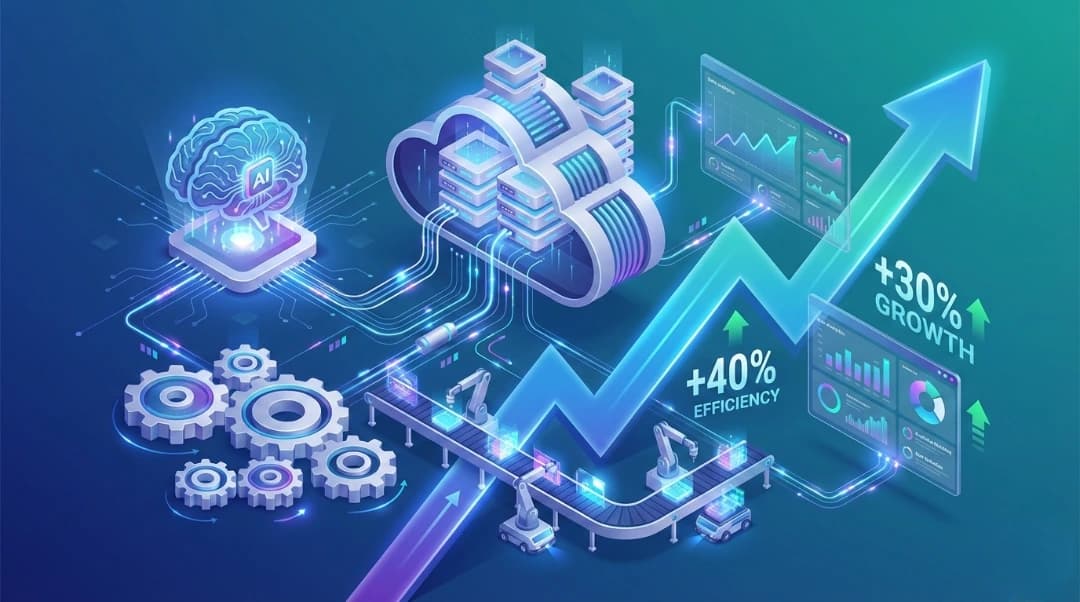
Strategic implementation of digital solutions improves operational efficiency by up to 40%, reduces costs, and accelerates time-to-market for products and services.
Combining Enterprise Support Services with transformation initiatives ensures sustainable success and continuous optimization of digital infrastructure.
1. Accelerating Innovation Through Cloud-Native Architectures
Cloud-native architectures enable businesses to innovate faster, scale efficiently, and reduce infrastructure costs while maintaining security and reliability.
Digital Transformation Engineering fundamentally changes how organizations build and deploy applications by embracing cloud-native principles. This approach involves designing systems specifically for cloud environments, utilizing microservices, containers, and serverless computing to create flexible, resilient applications. Companies adopting cloud-native architectures report 60% faster deployment cycles and 50% reduction in infrastructure costs. For example, a fintech company migrating from monolithic systems to cloud-native architecture reduced their time-to-market for new features from months to weeks, enabling them to respond rapidly to market demands. The scalability of cloud-native solutions also ensures businesses can handle traffic spikes during peak periods without over-provisioning resources during quieter times. With over 20 years of experience, IdeaGCS helps organizations architect and implement cloud-native solutions that align with business objectives while optimizing performance and cost-efficiency.
2. Enhancing Operational Efficiency with AI and Automation
Artificial intelligence and intelligent automation transform repetitive tasks into streamlined processes, freeing teams to focus on strategic initiatives that drive business value.
The integration of AI-driven automation within digital transformation engineering creates unprecedented efficiency gains across business operations. Organizations implementing AI and automation solutions experience 35-40% productivity improvements by eliminating manual, repetitive tasks and reducing human error. Machine learning algorithms analyze vast datasets to identify patterns, predict outcomes, and optimize decision-making processes in real-time. For instance, AI-powered quality assurance systems can detect defects in manufacturing processes with 99% accuracy, significantly reducing waste and improving product quality. Intelligent automation also extends to customer service, where AI chatbots handle routine inquiries, allowing human agents to focus on complex issues requiring empathy and creativity. By leveraging Data and AI Services, businesses gain competitive advantages through predictive analytics, personalized customer experiences, and data-driven strategies that continuously improve over time.
3. Building Seamless Integration with API-Led Connectivity
API-led connectivity creates a unified digital ecosystem where applications, data, and devices communicate seamlessly, eliminating silos and improving business agility.
Modern businesses operate across multiple platforms, applications, and data sources, making integration a critical component of digital transformation engineering. API-led connectivity provides a structured approach to connecting disparate systems, enabling real-time data exchange and process automation across the organization. Companies implementing API-led strategies reduce integration time by 50% and improve system flexibility, allowing them to adapt quickly to changing business requirements. This approach follows a three-layered architecture: experience APIs for user-facing applications, process APIs for business logic, and system APIs for underlying data sources. A healthcare provider using API-led connectivity integrated patient records, billing systems, and appointment scheduling into a unified platform, improving patient experience and reducing administrative overhead by 30%. MuleSoft Integration Services enable organizations to build robust, scalable integration architectures that support current operations while accommodating future growth and innovation.
4. Strengthening Business Resilience with Hybrid Cloud Solutions
Hybrid cloud strategies combine the flexibility of public cloud with the security of private infrastructure, creating resilient systems that balance performance, compliance, and cost.
Digital transformation engineering leverages hybrid cloud architectures to address complex business requirements that single-cloud solutions cannot meet. This approach allows organizations to keep sensitive data in private clouds while utilizing public cloud resources for less-critical workloads, optimizing both security and cost. Studies show that 82% of enterprises adopt hybrid cloud strategies to improve disaster recovery capabilities and ensure business continuity. A financial services firm implemented a hybrid cloud solution to maintain regulatory compliance for customer data while leveraging public cloud scalability for analytics and customer-facing applications. The result was 99.99% uptime and 45% reduction in total cost of ownership. Hybrid cloud environments also support gradual migration strategies, allowing businesses to modernize at their own pace without disrupting operations. With comprehensive Hybrid Cloud Services, organizations build flexible infrastructure that adapts to evolving business needs while maintaining security and performance standards.
5. Ensuring Continuous Success with Proactive Support and Optimization
Ongoing monitoring, maintenance, and optimization ensure digital transformation initiatives deliver sustained value and adapt to changing business landscapes.
The journey of digital transformation doesn't end with implementation—continuous support and optimization are critical for long-term success. Proactive Enterprise Support Services monitor system performance, identify potential issues before they impact operations, and implement regular updates to maintain security and efficiency. Organizations with dedicated support frameworks experience 60% fewer critical incidents and 70% faster resolution times when issues do occur. This includes 24/7 monitoring of digital infrastructure, regular performance assessments, and strategic guidance for future enhancements. For example, a retail company with comprehensive support services detected and resolved a potential security vulnerability before it could be exploited, protecting customer data and maintaining trust. Regular optimization reviews also identify opportunities to leverage new technologies, improve processes, and reduce costs. By combining transformation initiatives with robust Enterprise Support Services, businesses ensure their digital investments continue delivering value while adapting to technological advances and market changes.
Conclusion
Digital Transformation Engineering represents a fundamental shift in how businesses leverage technology to achieve strategic objectives, drive growth, and maintain competitive advantage. By implementing cloud-native architectures, AI-driven automation, API-led connectivity, hybrid cloud solutions, and continuous support frameworks, organizations create resilient, agile operations capable of thriving in dynamic markets. The five strategies outlined demonstrate that successful transformation requires more than technology adoption it demands a holistic approach integrating people, processes, and technology to deliver measurable business outcomes. With over two decades of experience helping organizations across healthcare, fintech, insurance, and other industries, IdeaGCS provides the expertise and solutions needed to navigate complex transformation journeys. Whether you're modernizing legacy systems, scaling digital operations, or building entirely new digital capabilities, partnering with experienced digital transformation consulting firms ensures your initiatives deliver sustainable value. Ready to accelerate your business growth through digital transformation? Contact IdeaGCS today to discover how our comprehensive engineering services can transform your organization's future.
Frequently Asked Questions
1. What is Digital Transformation Engineering?

Digital Transformation Engineering is a strategic methodology that combines advanced technologies—including cloud computing, AI, automation, and data analytics with engineering principles to modernize business processes, improve operational efficiency, and create competitive advantages. It goes beyond simple technology adoption to fundamentally reimagine how organizations operate and deliver value.
2. How does Digital Transformation Engineering improve business growth?
Digital Transformation Engineering drives growth by streamlining operations, reducing costs by 20-30%, accelerating innovation cycles, and enabling data-driven decision-making. It helps businesses scale efficiently, improve customer experiences, and respond rapidly to market changes. Organizations partnering with applications and digital engineering services experts achieve measurable results faster.
3. What role does Enterprise Support Services play in digital transformation?
Enterprise Support Services ensures digital transformation initiatives deliver sustained value through 24/7 monitoring, proactive maintenance, performance optimization, and rapid issue resolution. These services reduce critical incidents by 60% and help organizations adapt their digital infrastructure to evolving business needs, ensuring continuous improvement and maximizing ROI from transformation investments.
4. How long does Digital Transformation Engineering implementation take?
Implementation timelines vary from 6 to 18 months depending on organizational complexity, project scope, and existing infrastructure. Smaller initiatives may complete in 3-6 months, while comprehensive enterprise transformations require 12-24 months with phased rollouts. Partnering with experienced providers like technical staffing services teams accelerates delivery.
5. What are the biggest challenges in Digital Transformation Engineering?
Major challenges include legacy system integration, organizational resistance to change, cybersecurity concerns, skill gaps, and budget constraints. Success requires comprehensive planning, executive sponsorship, employee training, and selecting the right digital transformation services provider who understands industry-specific requirements and delivers proven methodologies.
6. Can small businesses benefit from Digital Transformation Engineering?
Absolutely. Digital Transformation Engineering scales to fit SMB budgets through cloud-based solutions, phased implementations, and targeted initiatives. Small businesses achieve 25-35% efficiency gains by starting with specific improvements like workflow automation or customer experience enhancements. Many begin with modernizing legacy systems before expanding transformation efforts.
7. What technologies are essential for Digital Transformation Engineering?
Essential technologies include cloud platforms (AWS, Azure, Google Cloud), AI and machine learning, API integration tools, containerization, microservices architectures, DevOps pipelines, and advanced analytics platforms. The specific technology stack depends on business objectives, industry requirements, and existing infrastructure. Organizations should prioritize interoperable, scalable solutions.
8. How do you measure Digital Transformation Engineering success?
Success metrics include operational efficiency improvements, cost reduction percentages, revenue growth, customer satisfaction scores, time-to-market reduction, system uptime, employee productivity gains, and innovation velocity. Establishing clear KPIs aligned with business objectives before implementation enables accurate measurement and demonstrates tangible ROI throughout the transformation journey.
9. What is the ROI of Digital Transformation Engineering initiatives?
Organizations typically achieve 20-30% cost reduction, 25-40% productivity improvement, and 15-25% revenue growth within 2-3 years. Specific ROI varies by industry and scope. Automation alone can reduce deployment time by 60% and infrastructure costs by 35-50%, while improved customer experiences drive higher retention and lifetime value.
10. How does Digital Transformation Engineering differ from traditional IT upgrades?
Digital Transformation Engineering is holistic and strategic, focusing on reimagining business models and customer experiences. Traditional IT upgrades simply modernize existing systems without changing fundamental operations. Transformation leverages emerging technologies to create new value streams, competitive advantages, and business capabilities rather than maintaining current functions with newer tools.
Contact Us
Share on Social Media
Contact Us