How to Hire AI Engineers and Machine Learning Experts
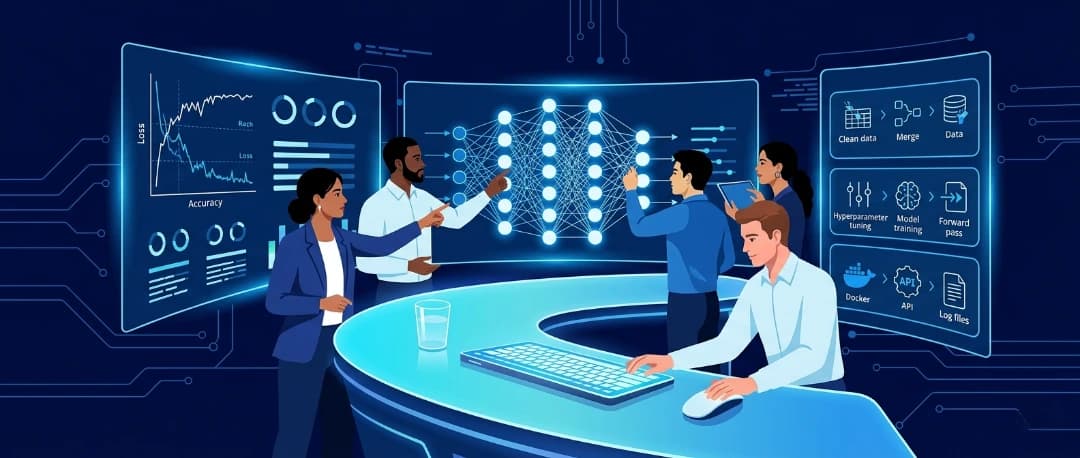
The global race for AI talent is intensifying at a pace few industries have seen before. Businesses across healthcare, fintech, logistics, and enterprise technology are competing fiercely to hire AI engineers capable of building intelligent systems, predictive models, and data-driven products. Yet despite surging demand, qualified professionals remain scarce, and many organizations struggle to define exactly what they need before launching a search.
This guide walks you through how to hire AI engineers and machine learning experts with clarity and confidence, covering the skills that matter, the strategies that deliver results, and how a trusted recruitment partner can transform your hiring outcomes.
Key Takeaways
The global AI talent market is highly competitive, requiring companies to shift from reactive to structured, proactive recruitment.
Knowing which technical and soft skills to prioritize before posting any job description is critical to attracting the right candidates.
Working with a specialist IT staffing firm like IdeaGCS accelerates hiring timelines and improves candidate quality across global markets.
Why the Demand for AI Engineers Is Growing Rapidly
Artificial intelligence is no longer a competitive differentiator for most industries. It has become a baseline expectation. From healthcare diagnostic tools to financial risk scoring, logistics optimization, and retail personalization, organizations everywhere are embedding machine learning into core business workflows. According to the World Economic Forum, AI-related roles rank among the fastest-growing job categories globally, with millions of new positions projected over the next five years.
This surge has created a significant talent gap. The number of companies looking to hire AI engineers far exceeds the pool of qualified professionals available at any given time. Organizations that rely solely on traditional job boards, move slowly through their hiring process, or lack a clear candidate evaluation framework consistently lose top talent to better-prepared competitors.
AI engineering is also evolving beyond traditional boundaries. The convergence of AI with infrastructure, automation, and operations means companies need to rethink their hiring categories entirely. As IdeaGCS explores in its guide on why your next DevOps hire should be an AI engineer, defining your specific AI requirements early and aligning them with your broader technology roadmap is one of the most impactful steps you can take before opening a search.
Key Skills to Look for When Hiring AI Engineers
A successful AI talent hiring strategy begins with knowing precisely what technical and non-technical capabilities your hire must bring to the role. The ideal candidate profile will vary depending on your use case, whether that is building a natural language processing system, a computer vision platform, a recommendation engine, or a real-time prediction model. However, several core competencies apply across almost every AI and machine learning engineering position.
Technical skills to evaluate include proficiency in Python along with ML frameworks such as TensorFlow, PyTorch, or Scikit-learn. Candidates should also demonstrate experience designing data preprocessing and feature engineering workflows, hands-on knowledge of cloud platforms including AWS, Azure, or Google Cloud for model deployment, and familiarity with MLOps tools such as MLflow, Kubeflow, and Amazon SageMaker. A strong grounding in statistical modeling, linear algebra, and probability theory is equally important, as is experience building or operating scalable AI-powered data pipelines in production environments.
Beyond technical proficiency, effective AI engineers must communicate complex model behavior to non-technical stakeholders. Problem-solving under ambiguity, intellectual curiosity, and cross-functional collaboration consistently separate high-impact AI professionals from those who can only execute well-defined tasks. When recruiting AI developers globally, do not underweight these soft skills during the interview and assessment process. The best AI hires understand both the mathematics behind their models and the business context in which those models operate.
Effective AI Recruitment Strategies for Companies
Identifying qualified candidates requires more than posting a job description and waiting. The most skilled machine learning engineers are rarely passive job seekers. They are deeply embedded in research communities, open-source projects, AI competitions, and specialized forums. Reaching them requires a proactive and multi-channel approach backed by a clear employer value proposition.
Defining the role with precision is the essential first step. Vague descriptions push strong candidates away. Specify the models you work with, the data infrastructure you use, the business problem you are solving, and the career trajectory you offer. Sourcing from technical communities is equally important. GitHub repositories, Kaggle competition results, arXiv preprint contributions, and communities like Hugging Face are where many highly capable AI professionals are active and discoverable.
Designing assessments that mirror real work signals organizational maturity and respect for a candidate's expertise. Well-constructed take-home challenges or collaborative problem-solving sessions work far better than abstract whiteboard tests. Offering transparent and competitive compensation is also non-negotiable. AI talent commands premium rates globally, and candidates expect clear information about compensation from the first conversation. Companies that hide salary ranges or delay compensation discussions lose strong candidates at a disproportionate rate.
Partnering with an IT staffing specialist provides significant advantages for companies without a dedicated technical recruiter. IdeaGCS's technical staffing services give businesses direct access to a pre-vetted global network of AI and machine learning professionals, reducing time-to-hire and improving the caliber of every candidate entering your process.
How to Build an AI Team for Business
Hiring one engineer rarely solves an AI problem at scale. Building a functional AI team for business requires assembling the right combination of roles to cover the full lifecycle of model development, deployment, and ongoing improvement. A well-structured team typically includes data engineers who design and maintain the data infrastructure that feeds your models, machine learning engineers who train and optimize those models for production, and data scientists who conduct exploratory research and design statistical approaches to business questions. MLOps engineers manage deployment pipelines, monitoring frameworks, and model retraining schedules, while AI product managers translate business objectives into concrete AI project requirements.
The ideal team composition depends on your current maturity level and the scale of your AI ambitions. Early-stage companies benefit most from versatile data science hiring that brings in generalists who can span multiple functions. Enterprise teams typically require deep specialists across each discipline.
It is also worth planning for growth from the beginning. The roles you need to fill today will expand as your AI capabilities mature. Building with scalability in mind, both in terms of team structure and tooling decisions, prevents costly reorganizations down the line.
IdeaGCS's Data and AI Services are designed to support businesses at every stage, with over 20 years of IT consulting experience guiding how teams are structured and staffed.
Why Work with IdeaGCS for Global AI Talent Hiring
Recruiting AI developers globally introduces a layer of complexity that most internal HR teams are not equipped to handle on their own. Validating highly specialized technical skills, navigating compensation benchmarks across different markets, managing time zone logistics, and assessing cultural fit for distributed team environments all require domain-specific expertise that takes years to develop.
IdeaGCS serves businesses across the USA, UK, UAE, and global markets, helping them identify, evaluate, and onboard qualified AI and machine learning professionals at speed. With a deeply vetted candidate network, a structured technical assessment process, and decades of experience in IT staffing, IdeaGCS consistently delivers outcomes that internal recruitment efforts struggle to match.
Whether you need a senior machine learning engineer to lead a critical model development initiative, a team of AI developers to accelerate a product launch, or strategic input on structuring your AI recruitment process from scratch, IdeaGCS offers the depth and reach to deliver results.
Machine learning is already transforming how enterprises use AI to improve data accuracy and decision quality across industries. Hiring the right experts is the essential first step to capturing those gains for your business.
Conclusion
The ability to hire AI engineers and machine learning experts at the right moment and with a well-designed selection process has become a defining advantage for forward-looking businesses. Companies that invest in building capable, well-structured AI teams gain the power to automate intelligently, personalize at scale, and compete on the quality of their decisions. Achieving that requires clarity on required skills, a proactive recruitment approach, and often the support of an experienced partner.
IdeaGCS brings over 20 years of IT consulting expertise and a global talent network to every engagement. Contact IdeaGCS today to start building the AI team your business needs to move forward.
Frequently Asked Questions
What skills should I look for when hiring AI engineers?

What is the difference between an AI engineer and a machine learning engineer?
How long does it take to hire a qualified machine learning engineer?
How much does it cost to hire AI engineers?
What are the best platforms for recruiting AI developers?
How can small businesses compete for AI talent against large tech companies?
What is the typical structure of an AI development team?
What is data science hiring and how does it relate to AI recruitment?
How do I evaluate a machine learning engineer's technical ability during hiring?
Why should companies partner with an IT staffing firm for AI recruitment?
Contact Us
Share on Social Media
Contact Us