How to Hire Top IT Talent in 2026: A Complete Guide for Companies
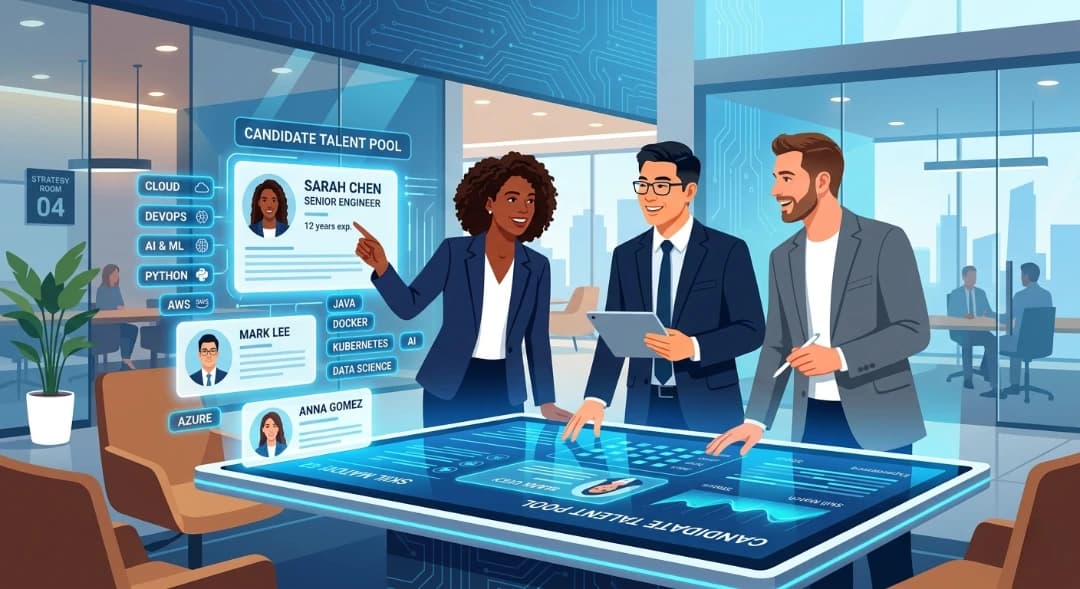
Finding and retaining skilled technology professionals is one of the most pressing challenges for businesses in 2026. As demand for software developers, cloud architects, and AI specialists continues to outpace supply, knowing how to hire IT talent effectively can mean the difference between building a competitive product and falling behind.
The talent gap is widening across sectors, with companies in healthcare, fintech, logistics, and enterprise software all competing for the same limited pool of qualified professionals. This guide walks CTOs, HR managers, and startup founders through the most practical IT recruitment strategies available today, from defining the right role profiles to sourcing candidates and making smarter, faster hiring decisions that reduce costly mis-hires.
Key Takeaways
The global IT talent shortage is intensifying in 2026, making proactive and targeted recruitment more critical than ever for companies in every sector.
Skills-based evaluation, structured interviews, and strong employer branding are among the best ways to hire software developers in a competitive market.
Partnering with specialized IT recruitment services can reduce time-to-hire and improve candidate quality for companies of all sizes.
The IT Talent Landscape in 2026: What Has Changed
The technology job market has shifted dramatically, driven by AI adoption, remote work, and accelerating digital transformation across industries.
The demand for skilled IT professionals has never been higher. Tech occupations are projected to grow significantly faster than the average job market through the late 2020s, according to U.S. Bureau of Labor Statistics data.
In 2026, companies are competing for expertise in AI engineering, cloud integration, cybersecurity, and full-stack development across borders and time zones. Remote and hybrid work models have expanded the candidate pool geographically but have also intensified global competition for the same talent. Tech hiring trends now point clearly toward skills-based hiring over credential-based hiring, meaning companies must update their evaluation frameworks to remain effective. Businesses undergoing digital transformation face even greater urgency, as new projects demand niche technical profiles that are in short supply globally.
Top IT Recruitment Strategies to Win the Best Candidates
A structured, proactive approach to IT recruitment strategies for businesses can dramatically improve both the quality and speed of your hires.
Effective IT recruitment strategies for businesses begin long before a job posting goes live. Companies that consistently win top talent invest in building an employer brand that resonates with developers and engineers, showcasing the tech stack, team culture, and growth opportunities across platforms like LinkedIn and GitHub. Structured job descriptions that focus on real-world responsibilities rather than inflated credential requirements attract a broader, more qualified candidate pool.
Using skills-based assessments early in the hiring funnel filters candidates far more efficiently than resume screening alone. Sourcing through developer communities, open-source project contributors, and niche job boards yields candidates that generic platforms rarely surface. Referral programs are also highly effective in the tech industry, as existing engineers tend to recommend peers with comparable skill levels and work ethic.
Partnering with trusted IT recruitment services for tech companies can further accelerate hiring by providing access to pre-vetted talent networks that align precisely with your technical requirements and culture.
How to Hire Software Developers: A Skills-First Approach
The best way to hire software developers in 2026 is to evaluate real-world coding ability, problem-solving skills, and cultural fit rather than relying on academic credentials alone.
When you hire software developers, the process must go well beyond reviewing resumes. The most effective approach combines structured technical interviews, take-home coding challenges, and pair programming sessions that reveal how a candidate thinks and collaborates under realistic conditions. Tools such as HackerRank and Codility allow companies to build role-specific assessments tied directly to their actual tech stack, making the evaluation process both objective and relevant. Cultural fit matters equally. Developers who align with your team's working style and values are significantly more likely to stay and contribute meaningfully over the long term. It is also worth investing time in a clear onboarding plan before the hire is made, as candidates increasingly evaluate companies on the quality of their onboarding experience during offer negotiations.
For companies hiring IT professionals in 2026, structured scoring rubrics and diverse interview panels are now recognized best practices for reducing unconscious bias and improving the overall quality and consistency of hiring decisions.
How to Build a Tech Team for Startups
Startups face unique IT hiring challenges, and knowing how to build a tech team for startups requires balancing speed, budget constraints, and long-term scalability from day one.
For startups, every hiring decision carries significant weight. A single wrong technical hire can slow product development by months and drain limited resources. The key is to prioritize adaptable generalist engineers in the early stages and layer in specialists as the product and team mature. Define your core technology decisions early, whether you are building on AWS, Azure, or a microservices architecture, as these choices directly inform the skill profiles you need most. Startups also benefit strongly from staff augmentation, which allows them to bring in experienced IT professionals for specific project phases without the overhead of permanent full employment.
IdeaGCS's technical staffing services are purpose-built to support exactly this kind of flexible, scalable team building, helping startups move from concept to execution without the delays of traditional hiring cycles.
IT Staffing Solutions: When to Partner with a Specialist
Specialized IT staffing solutions help companies fill roles faster, reduce the cost-per-hire, and access talent that is difficult to find through standard recruitment channels.
Many companies, particularly those scaling quickly or entering new technology domains, find that internal HR teams lack the technical depth to evaluate and attract niche IT talent effectively. This is where dedicated IT recruitment services add measurable value. A specialized partner brings pre-vetted talent networks, the technical knowledge to assess candidates accurately, and current market intelligence on compensation benchmarks and availability by role. Companies that engage expert partners report shorter hiring cycles, better retention rates, and lower total recruitment costs over time.
With over 20 years of experience, IdeaGCS has helped businesses across the USA, UK, UAE, and the Philippines build high-performance technology teams aligned to their strategic goals. Discover how building high-performance tech teams becomes faster and more effective with the right recruitment partner.
Tech Hiring Trends Shaping IT Recruitment in 2026
Staying current with the latest tech hiring trends helps businesses adapt their strategies and remain competitive in a fast-moving talent market.
Several key trends are reshaping how companies hire IT talent in 2026.
First, AI-assisted recruitment tools are now widely used to screen applications, schedule interviews, and predict candidate success using behavioral and skills data. Second, top developers expect competitive remote-work flexibility, equity participation, and continuous learning stipends as standard parts of a compensation package. Third, diversity, equity, and inclusion initiatives are becoming central to hiring policy, with many organizations actively sourcing from underrepresented communities and non-traditional educational backgrounds to access wider talent pools. Fourth, technology roles are converging with AI and automation, meaning even traditional software developers benefit from familiarity with machine learning frameworks. Fifth, speed is increasingly a competitive differentiator in hiring; companies that take more than four weeks to extend an offer frequently lose shortlisted candidates to faster-moving competitors.
For companies evaluating their next DevOps or AI engineering hire, understanding this convergence and these shifting expectations is essential to defining the right role and evaluating the right candidates.
Conclusion
Knowing how to hire IT talent in 2026 demands more than posting a job description and waiting. It requires a proactive strategy that combines strong employer branding, skills-based evaluation, market-competitive compensation, and the right recruitment partnerships to deliver results at speed. The companies that move fastest are those that treat IT recruitment as a continuous, strategic function rather than a reactive process triggered only when a vacancy appears. Whether you are a startup founder assembling your first engineering team or a CTO scaling an enterprise development department, the strategies outlined in this guide provide a practical and actionable roadmap. IdeaGCS brings over 20 years of experience connecting companies with qualified IT professionals across every technology domain. Ready to build your next great technology team?
Contact IdeaGCS today to explore tailored IT staffing solutions designed for your business goals.
Frequently Asked Questions
What is the best way to hire IT talent in 2026?

What are the most effective IT recruitment strategies for businesses?
How do I hire software developers for my company?
What are the top tech hiring trends in 2026?
How long does it typically take to hire an IT professional?
What IT staffing solutions work best for growing companies?
Should I use an IT recruitment agency or hire IT talent directly?
How do I evaluate technical skills when hiring IT professionals?
How do I build a tech team for a startup with a limited budget?
How can IdeaGCS help my company hire IT professionals?
Contact Us
Share on Social Media
Contact Us